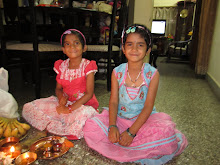
Where will you get Mysore Pak and Bangalore Pak together or Sonia Gandhi mingling with Shah Rukh Khan, Amitabh Bachchan and Juhi Chawla. You will also get High Court, Vidhana Soudha, Glucose, Cycle, Hotel, Coffee and English, all at one go and in one place.
Surprised. Don’t be. These are names of people who live in colonies near Bannerghatta, Bangalore
The people staying in these areas are called Hakki Pikkis and they belong to an exclusive group of tribals who till four decades ago, made a living off the forests.
However, strict implementation of forest conservation rules during the 1970s forced these tribals out of their homes and into the unfriendly urban landscape.
The Government settled these tribals in several parts of the State, including Bhadrapur near Bidadi on the outskirts of Bangalore and near Bannerghatta, Bangalore Mysore
In case you are interested in learning about tribals and their way of life, visit these settlements. The will be a marvelous sociological visit and will help you in knowing how people live in the forests and how difficult it is for the forest dwellers to adapt to urban life.
Visit Bhadrapura near Bidadi taluk and stuffy the tribal way of life, their lifestyle, customs and traditions and it is amazing that just 25 kilometers from Bangalore
In Bangalore
However, go to Bhadrapur and you find a two-year-old Sonia Gandhi playing with Coffee or chattering with High Court or quarreling with Shah Rukh Khan and of course Congress and Janata peacefully smoking a pipe.
The Hakki Pikki have their own unique manner of naming their children and they name them with the first word that comes to their mind. In some cases, the name or place that is associated with the child just before he or she is born, is the name that is given to the baby. Thus, if the parents have happened to see High Court or heard of the name before their child was born, its name will be High Court. Though strange, the custom truly needs to be admired. The names do not tell you the caste or community and this perfectly illustrates the adage, “What is in a name”.
So the names that the Hakki Pikki give are taken from the objects and personalities they see around them and sometimes even eatables and food grains.
The tribe started this peculiar naming ritual about a decade ago, as a link with the outside world. The Hakki Pikkis earlier lived in dense forests and they began interacting with people from outside the tribe only when they came out of the forests to sell their wares.
However, with the IT boom touching the tribals, they have stopped naming their children after places and things and have instead zeroed in on film stars, politicians and other famous personalities. We, therefore, can find a film fraternity near Bidadi with Shah Rukh Khan, Sonali Bendre, Anil Kapoor, Sridevi, Juhi Chawla and others making up the group.
However, with the IT boom touching the tribals, they have stopped naming their children after places and things and have instead zeroed in on film stars, politicians and other famous personalities. We, therefore, can find a film fraternity near Bidadi with Shah Rukh Khan, Sonali Bendre, Anil Kapoor, Sridevi, Juhi Chawla and others making up the group.
However, the odd names are not the only thing that sets apart these people from the rest. They have their own practices and some of them seem more odd and bizarre.
The Hakki Pikkis generally relish cats, birds and other small animals. They marry only at night and the mangalasutra is tied at the stroke of midnight.
Girls of the tribe who elope or run away are made to drink cow's urine. If a girl from a lower group elopes with a boy from a higher group, the girl, if caught, is made to drink cowdung mixed with water and cow urine. This ritual is meant to purify the girl. Then, her tongue is branded with a hot silver knife. After all this, she is married off to the same boy but she has still to pay a fine of Rs 1,000.
If a woman is caught killing her husband, her nose is chopped off. If the people suspect that a girl is not a virgin and they want to test her, she is asked to dip her hand in boiling oil.
Another strange custom is that the Hakki Pikkis do not believe in getting treated by doctors. They have their own brand of doctors who are skilled in treating wounds, ailments and infections with herbs and plants plucked from forests. Many of these doctors are bare foot and they give medicines for a variety of illness and diseases.
However, things have slowly started changing for the tribes. In Angadihalli in Hassan district, Hakki Pikki children are being sent to schools and males have been given land to cultivate crops. It may sound unbelievably but true that there are one hundred passport holders in this settlement and almost all of them have visited China , Tibet and Nepal
The men of this settlement market Rudrakshi which they get from Tibet
When the health officials visited Angadihalli, they were shocked to see that all the Hakki Pikki houses were surrounded by weeds, shrubs, creepers. When the health workers began cleaning the area, the Hakki Pikki sat back on their haunches and just watched them. None lent a helping hand or thanked the officials after the area was cleared.
The doctors found that the tribesmen rarely bathe or clan themselves. Most of the old tribesmen were found suffering from cataract.
The Hakki Pikki community of H D Kote too follow similar practices. These people board trains without tickets. If they are thrown out of one train, they board another. You see, they are the lucky few people on Earth who rarely bother about where they are headed. Just any city would do.
Well, what about their religion. These people have their own customs and rituals. They worshipped idols of Gods made in silver and some worship only once an year. The worship is in tents which are pitched outside the settlements. The Gods are all individuals and there is no community or common god. Animal sacrifice is very much a part of their religion.